Pixro vs Picjam: Which AI Product Photo Tool Wins?
Pixro vs Picjam: the short version
Two AI tools, one job: turn the photos you already have into images that sell. They go about it from opposite ends.
Picjam is the data layer. It scores your existing listing images against conversion benchmarks, then generates the shots you are missing — on-model, lifestyle, video. It is built for DTC brands scaling hundreds of SKUs who want to know which image sells before making more of it.
Pixro is the all-in-one, web-based AI creative platform — your always-on AI creative agency in a browser. One place gives you 15+ tools: product photoshoots, virtual try-on, ghost mannequin, flat-lay, bulk catalogue, banners and ads, AI influencers, and 6+ video tools — driven by an AI-agent chat and 40+ models it picks for you, on simple $10/$30 credit plans.
Choose Picjam if you want analytics and split-testing across a big catalogue. Choose Pixro if you want breadth — image and video in one workspace — with the least setup.
| Category | Pixro | Picjam |
|---|---|---|
| What it is | All-in-one, web-based AI creative platform for ecommerce and fashion | "Performance layer" — scores listings, then fills image gaps |
| Core generation | 15+ tools: photoshoot, try-on, ghost mannequin, flat-lay, catalogue, banners, AI influencers | On-model, lifestyle, virtual models, batch up to 100 SKUs/run |
| Analytics | Not a diagnostic tool — you judge output yourself | Listing scoring vs 40+ conversion measures; split-testing |
| Video | 6+ live video tools — AI reels, product commercials, image-to-video, UGC clips | AI photo and video gap-filling |
| How it works | Browser app with an AI-agent chat; 40+ models auto-orchestrated per job | Web app; Shopify / Amazon / Etsy integrations |
| Delivery | Self-serve web + always-on automation — connect your store/URL/catalogue, get fresh creatives on a schedule | Web app; marketplace integrations push images back to listings |
| Pricing | $10/mo Trial (50 credits) · $30/mo Growth (400 credits) · Business custom | $1 first week; recurring tiers not fully public (as of July 2026) |
| Best for | Sellers and brands wanting breadth — image + video + influencers — with low friction | Larger DTC catalogues wanting data-led image optimisation |
Picjam AI vs Pixro: what each one is built to do
Here is the honest distinction. Picjam does not just make images — it grades them. Point it at your live listings and it scores each one against 40-plus measures of what tends to drive conversion, then generates on-model and lifestyle shots to close the gaps it finds. That diagnostic layer is real, and Pixro does not have it. If your question is "which of my 300 images is dragging the listing down," Picjam answers it.
Pixro answers a different question: "I have one good photo and I need a full campaign by lunch." It is an all-in-one creative platform covering the whole apparel and product workflow — photoshoot backgrounds, virtual try-on, the ghost-mannequin hollow-man look, flat-lay, bulk catalogue runs, banners and ads, AI influencers, and a suite of video tools. You describe what you want in an AI-agent chat — "what do you want to create today" — and a crew of AI agents that behave like a creative director, art director, photographer and video editor takes it from there. Behind the chat, Pixro orchestrates 40+ underlying models and auto-picks the best one for each job, so you make creative decisions, not model decisions.
The wedge is breadth versus depth. Picjam goes deep on measuring and optimising imagery for scale. Pixro goes wide on generating it — stills, video and influencers in one workspace — and runs the studio through a chat window.
Bottom line: choose Picjam if you want a scoreboard for your catalogue. Choose Pixro if you want the widest set of shot and video types with the least setup.
Output and try-on quality
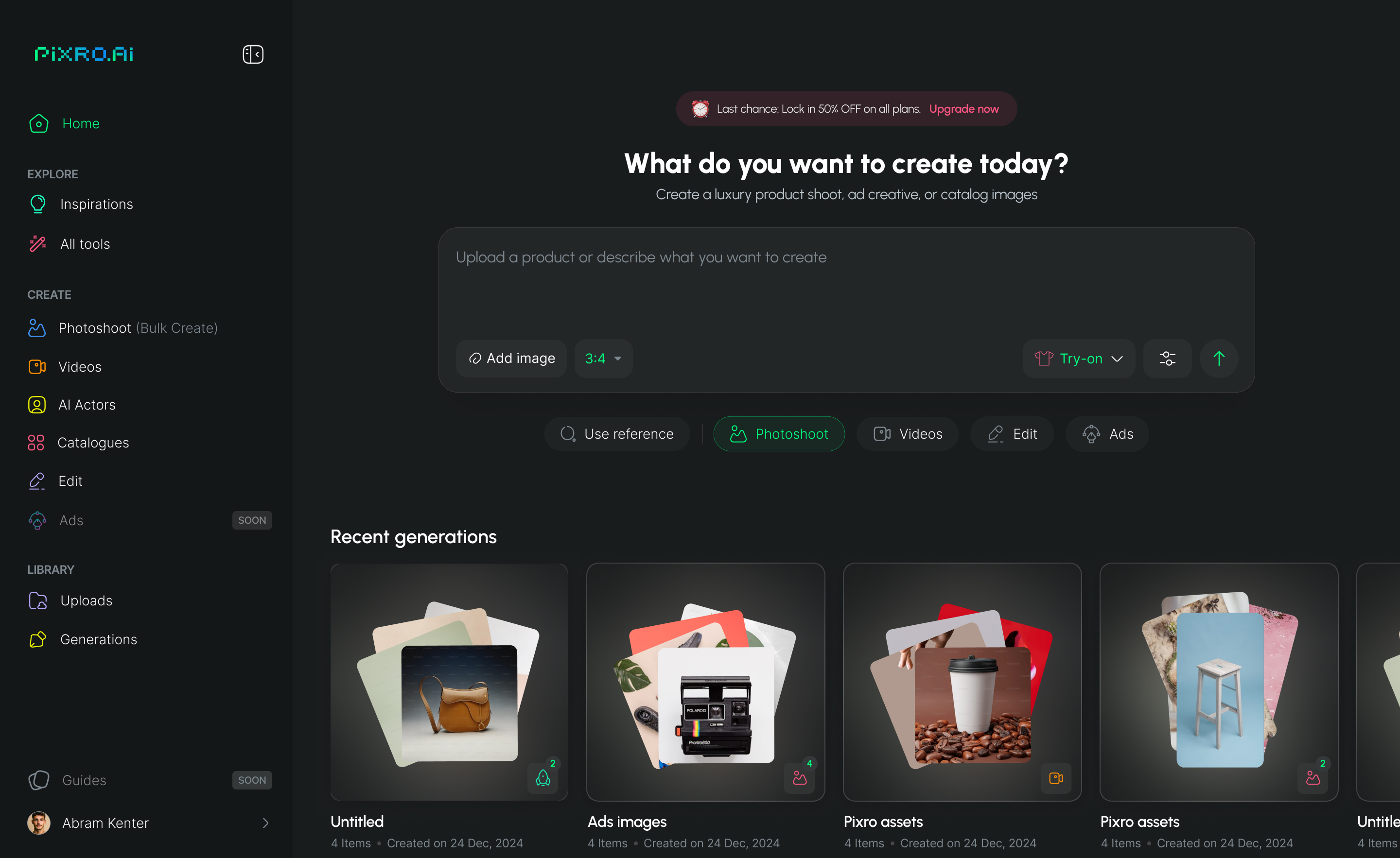
Both lean on art-directed models. Picjam offers a library of virtual models with no usage constraints and a BrandDNA training step to keep outputs on-brand — sensible for a catalogue that has to look coherent across a marketplace.
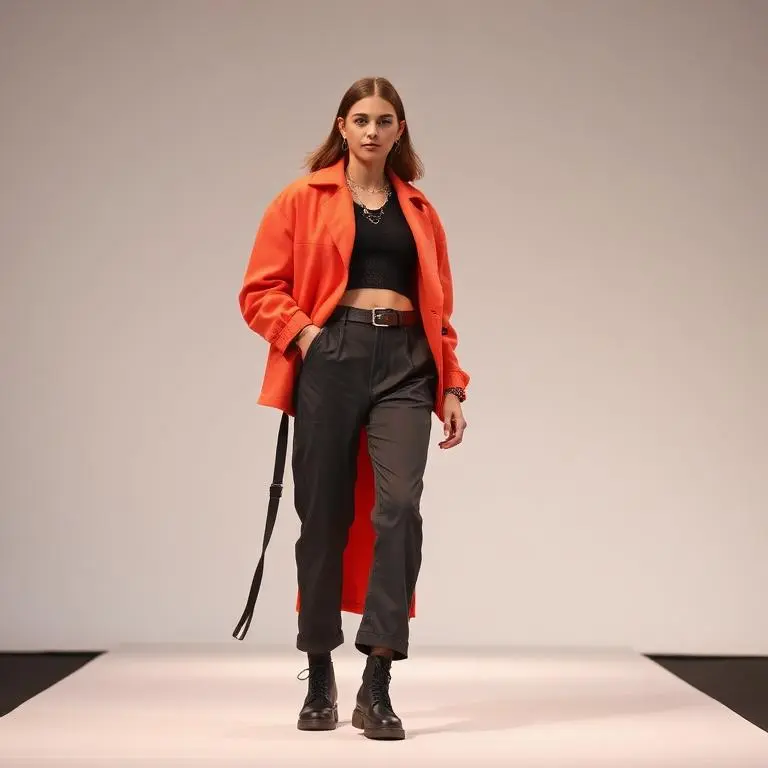
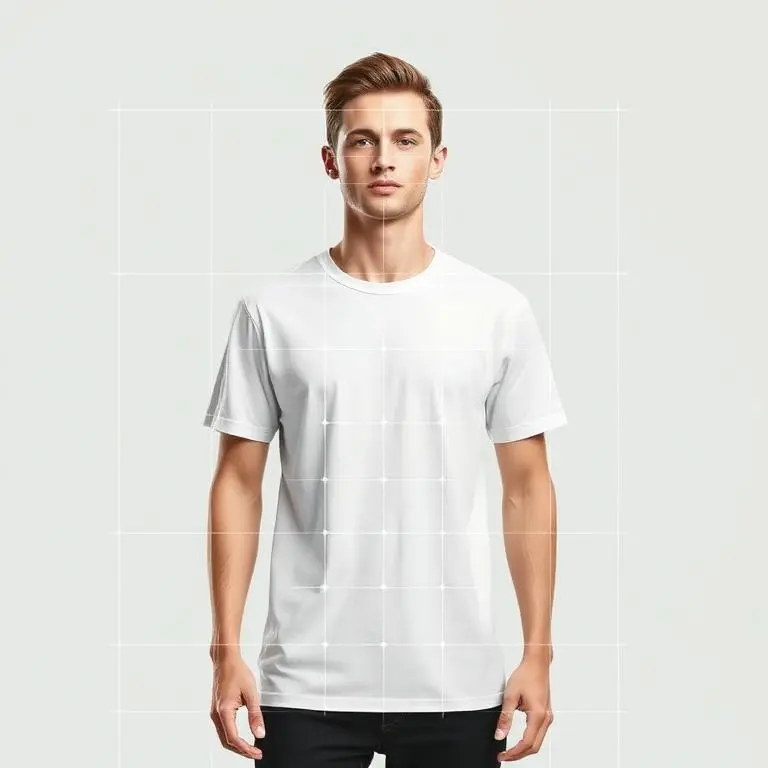
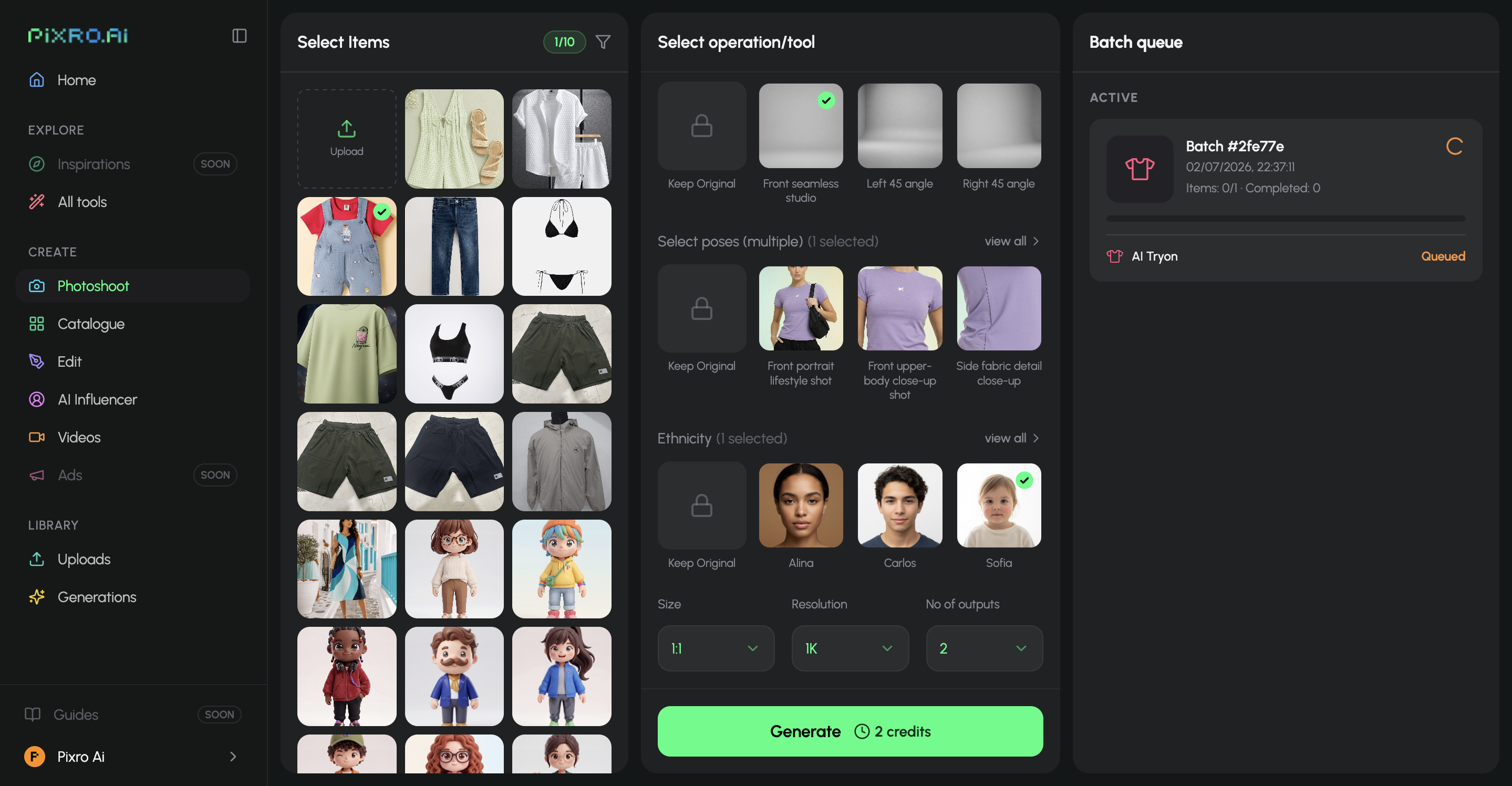
Pixro covers the fashion-specific looks a listing actually needs: on-model try-on for garments, ghost mannequin for the shirt that holds its own shape with nobody inside, and flat-lay for accessories. Because it auto-routes each job across 40+ models, it holds garment colour, texture and logo consistent across a whole collection — Pixro brands have generated 8-plus catalogue poses plus a reel and try-ons for a single garment in under a minute. The input still matters on either tool: feed a clean, evenly lit garment shot and you get a studio-grade result; feed a crumpled phone snap on your bed and no AI saves it.
Bottom line: choose Picjam if brand-trained model consistency at scale is the priority. Choose Pixro if you want try-on, ghost mannequin and reels in the same place you do everything else.
Catalogue consistency
This is where both tools earn their keep, and they are closer than the rest of the comparison. Picjam batches up to 100 SKUs in a single run and uses BrandDNA to keep a large catalogue visually aligned — clearly its home turf.
Pixro runs bulk catalogue generation too, with marketplace-ready output, so a hundred products land on the same seamless with the same framing — one brand cut a 500-plus catalogue image project down by roughly 90% of the usual time. The difference is who it is tuned for: Picjam assumes a big, established catalogue and a brand team; Pixro assumes anyone who wants consistency without a workflow to manage, and can put the whole run on autopilot.
Bottom line: choose Picjam for very large catalogues with a brand-consistency mandate. Choose Pixro if you want catalogue-wide consistency without the overhead.
Image and video
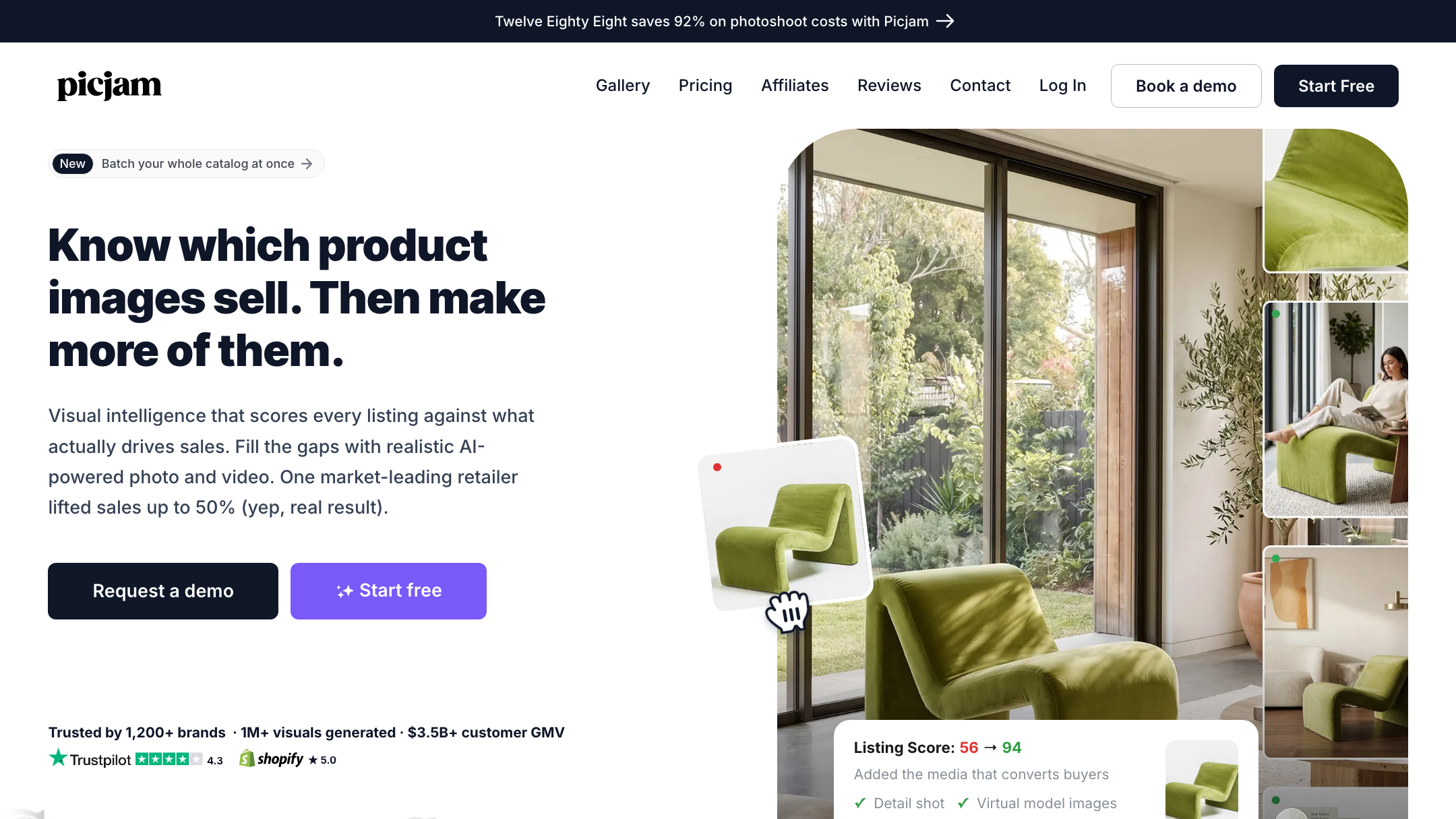
This is where the gap has flipped. Picjam does photo and video gap-filling as part of its optimisation loop. Pixro ships 6+ live video tools — AI reels, product videos and commercials, image-to-video, UGC-style clips, and a fashion reel maker — all in production today, not on a roadmap. So the video question is no longer "who will get there"; both make video now. On stills, both cover the on-model and lifestyle looks most listings need, and Pixro adds AI influencers and banners on top.
Bottom line: choose Picjam if video sitting inside an analytics loop matters most. Choose Pixro if you want a broad, shipped image-and-video suite in one platform.
Pricing
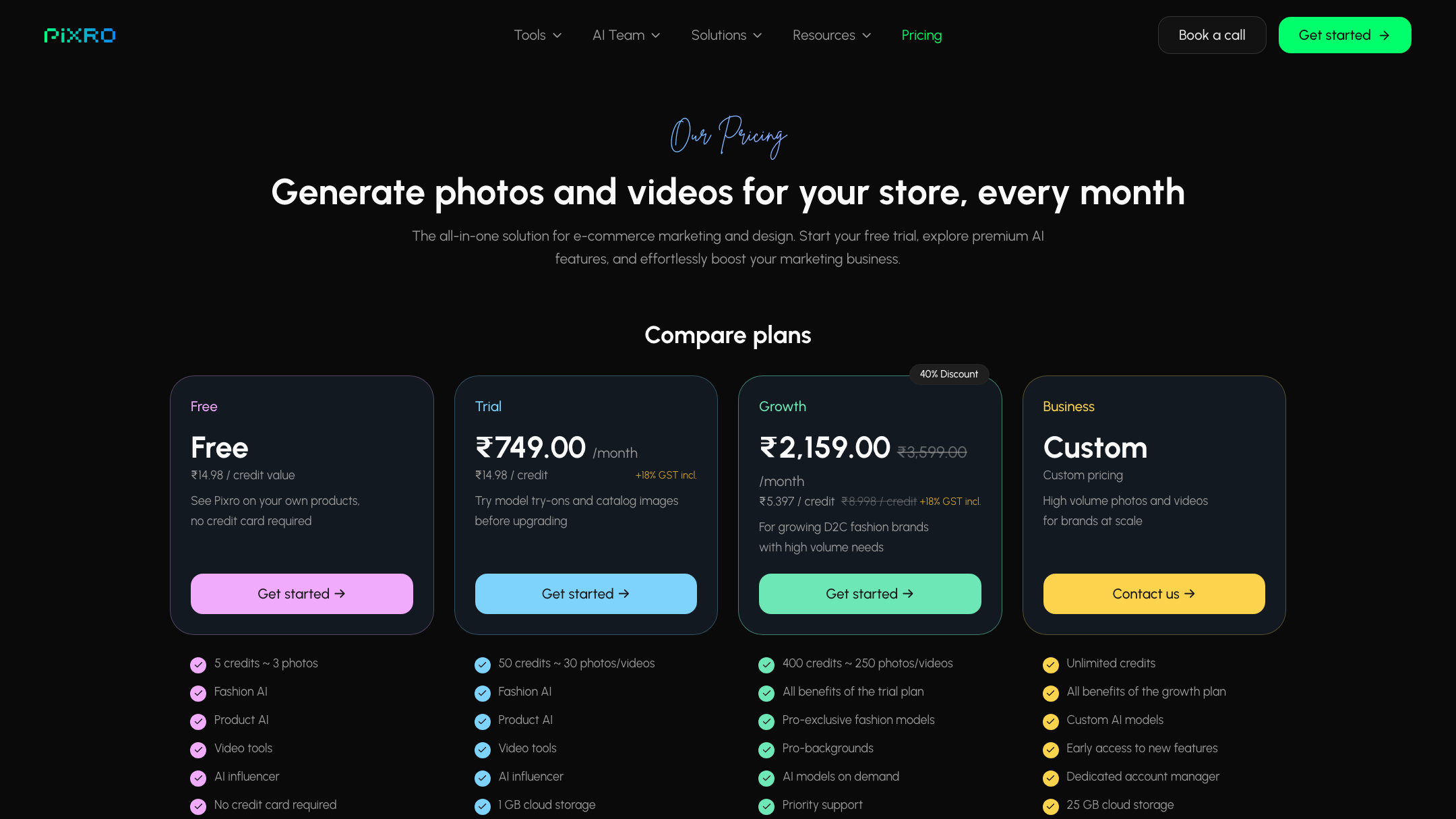
Pixro is credit-based and predictable. Trial is $10/mo (50 credits, roughly 30 photos or videos). Growth is $30/mo (400 credits, roughly 250). Business is custom for larger and enterprise needs. There is a free trial of the paid Trial plan, but no permanently free tier — you are paying from month one, and you know exactly what you get. Pay-as-you-go credit packs are available if you spike.
Picjam is harder to pin down. Its site advertises the first week for $1 and positions plans as "less than 1% of a physical photoshoot," but the recurring tiers are not fully public (as of July 2026 — check their site). Third-party aggregators cite a roughly $23–$29/month entry point and mention a free tier, but we could not confirm those figures on Picjam's own pricing page, so treat them as unverified. Worth flagging: some reviewers on Trustpilot report friction cancelling after the $1 trial and disputed charges — read those before you subscribe, especially if you are billing from Europe.
For a small store generating ~200 images a month, Pixro's $30 Growth plan is a known quantity. Picjam's true monthly cost past the $1 week is the part you will want in writing before committing.
Bottom line: choose Picjam if the value of its analytics justifies pricing you confirm directly. Choose Pixro if you want a published $10/$30 number you can budget around.
Ease of access and workflow
Picjam is a web app with native Shopify, Amazon, and Etsy integrations — excellent if you already run one of those and want images to flow back into listings. It also assumes you will learn a scoring dashboard.
Pixro is a browser app at pixro.ai with no install and no dashboard to master — you work through an AI-agent chat. Better still, it can run always-on: connect your Shopify store, a website URL, a product catalogue or your brand assets, and Pixro will generate and deliver ecommerce-ready, ad-ready and social-ready creatives on a schedule — set it once, get fresh visuals every day. Enterprise APIs are available if you want to wire generation into your own systems.
Bottom line: choose Picjam if marketplace integrations are the point. Choose Pixro if you want a chat-driven workspace that can also generate creatives on autopilot.
Support and scale
Picjam is enterprise-leaning and points to work with large brands, including a Crocs case study, plus claimed scale across 1,200-plus brands. That is reassuring if you are a big catalogue that wants a partner who has handled volume.
Pixro is bootstrapped and already serves 20-plus paying brands with 1,000-plus signups — including HRX, The Roadster, The Kids Label, Karma Dori and Reliance Jewels — so it is proven on real fashion and ecommerce catalogues, not just demos. Support is direct: reach the team quickly when you need a human, no formal onboarding required.
Bottom line: choose Picjam if a long enterprise track record reassures you. Choose Pixro if you want a proven platform with direct, responsive support.
Who Picjam is best for
Scaling DTC labels and established retailers with big catalogues — apparel, footwear, homeware, beauty — who want more than generation. If you care about knowing which images convert, want native split-testing, and already sell on Shopify, Amazon, or Etsy, Picjam's diagnostic layer is a genuine edge Pixro does not try to match. Reviewers who love it call out lifelike output and real time saved versus a physical shoot.
Who Pixro is best for
Sellers and brands who want the widest set of creative outputs with the least friction. If you would rather describe what you want in a chat than learn a dashboard, and you need stills, video and AI influencers from one place, Pixro fits. You get 15+ tools — try-on, ghost mannequin, catalogue, banners, 6+ video tools, AI influencers — with 40+ models orchestrated for you and always-on delivery to your store, ads and social, on a published $10/$30 plan.
If you are still weighing options, these head-to-heads help: Pixro vs Caimera, Pixro vs Caspa, Pixro vs Kive, and the model-generator face-off in Pixro vs Botika vs Fashn. For the wider field, see our best AI product photoshoot tools guide.
Scorecard

| Dimension | Pixro | Picjam | Edge |
|---|---|---|---|
| All-in-one breadth | ●●●●● | ●●●○○ | Pixro |
| Listing analytics / scoring | ○○○○○ | ●●●●● | Picjam |
| Split-testing imagery | ○○○○○ | ●●●●○ | Picjam |
| Marketplace integrations | ●●○○○ | ●●●●○ | Picjam |
| Catalogue consistency | ●●●●○ | ●●●●○ | Tie |
| Video + reels | ●●●●○ | ●●●○○ | Pixro |
| AI-agent workflow | ●●●●● | ●●○○○ | Pixro |
| Model range / orchestration | ●●●●● | ●●●○○ | Pixro |
| Pricing transparency | ●●●●● | ●●○○○ | Pixro |
The overall read: Picjam wins the rows about measuring and optimising imagery for a large catalogue — analytics, split-testing, and native marketplace plumbing. Pixro wins on breadth, video, its AI-agent workflow, the range of models it orchestrates, and pricing you can actually read. Pick the axis that matches your actual problem.
Switching: what transfers
Not much has to move, which makes trying Pixro low-risk. Your source product photos are the only real input either tool needs, so the images you fed Picjam work in Pixro unchanged. What does not carry over is the scoring history and any split-test data — those live inside Picjam's analytics and have no equivalent in Pixro, so if that layer is why you are there, keep it.
A practical path: keep Picjam for diagnostics on your top listings if you value them, and run Pixro alongside for the volume generation — try-on, ghost mannequin, catalogue, video and influencers — where breadth and the chat workflow save the most time. Reshoot nothing. Just point the same photos at the second tool.
FAQ
Is Picjam worth it?
If you run a large DTC catalogue and want to know which images convert — not just generate more — the listing scoring and split-testing are a real, differentiated feature. Confirm the recurring price on their own site first (as of July 2026 the tiers past the $1 first week are not fully public), and read recent Trustpilot notes on trial billing before you commit.
What is the best Picjam alternative?
For sellers who want breadth over analytics — 15+ tools spanning try-on, ghost mannequin, catalogue, banners, AI influencers and 6+ video tools, driven by an AI-agent chat on published $10/$30 credit plans — Pixro is the closest all-in-one alternative. If you specifically want conversion scoring, no generation-first tool replaces that layer.
Does Pixro have a free plan?
Pixro is credit-based, with a free trial of the paid Trial plan rather than a permanently free tier. The Trial plan is $10/mo (50 credits, about 30 photos or videos) and Growth is $30/mo (400 credits, about 250). Business is custom, and pay-as-you-go credit packs are available.
Is Pixro web-based? How do I access it?
Yes — Pixro is a browser app at pixro.ai, with nothing to install. You sign in, describe what you want in the AI-agent chat, and it generates stills, video and influencer content, auto-picking from 40+ models per job. You can also connect your store or catalogue so it delivers fresh creatives on a schedule. Need a human? Reach the team on WhatsApp at +91 6364871993 or email hello@pixro.ai.
Can I use both Picjam and Pixro?
Yes, and for some teams that is the smart move. Keep Picjam for listing diagnostics on your best sellers and run Pixro for high-breadth generation across images and video. The same source photos feed both, so there is nothing to migrate.
Try it on one product
You do not need a decision on the whole catalogue today. You have a product photo on your phone right now.
Drop it into Pixro's $10 Trial and generate the on-model, ghost-mannequin, catalogue and reel versions before your coffee is cold — then judge the result against your last studio invoice. If breadth and a chat-driven workflow are what you were missing, you will know by lunch.