Seedance 2.5: ByteDance's 30-Second AI Video for Ecommerce
Thirty seconds of product video used to mean a half-day call sheet. A set, a crew, a director watching the clock. Now it means a prompt and fifty reference files.
On June 23, 2026, ByteDance announced Seedance 2.5 — a new AI video model that generates a single, continuous 30-second clip in native 4K. No stitching, no cuts between segments, no editor patching two clips together at the seam. One generation, one shot.
For ecommerce brands running video on product detail pages, paid ads, and social, that changes the math on what's buildable this quarter.
Last updated: June 2026
What Seedance 2.5 actually ships
Seedance 2.5 builds on the Seedance 2.0 architecture with four specific improvements that matter for production work:
30-second native clips — generated in a single pass, not assembled from shorter segments joined at cuts
Native 4K with 10-bit color — output resolution suitable for large-screen retail display, marketplace listings, and connected TV ads
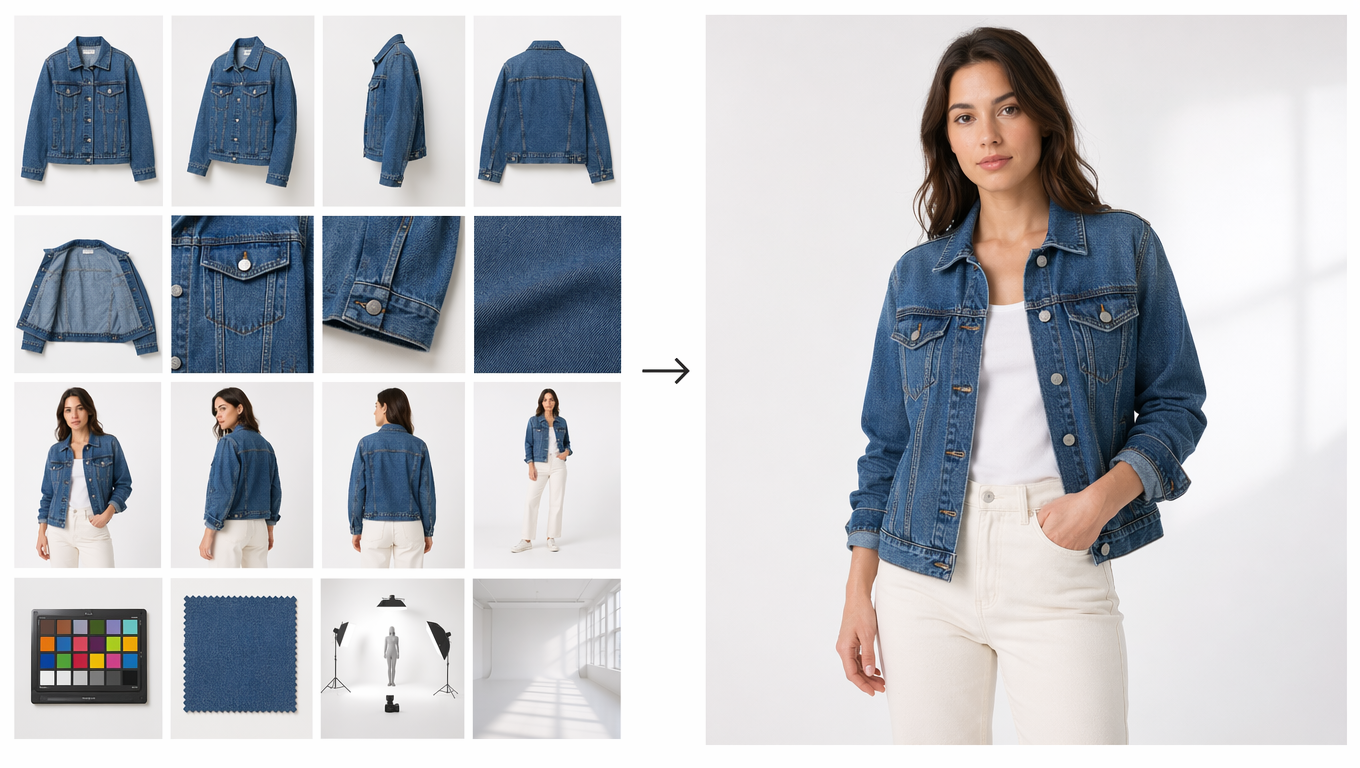
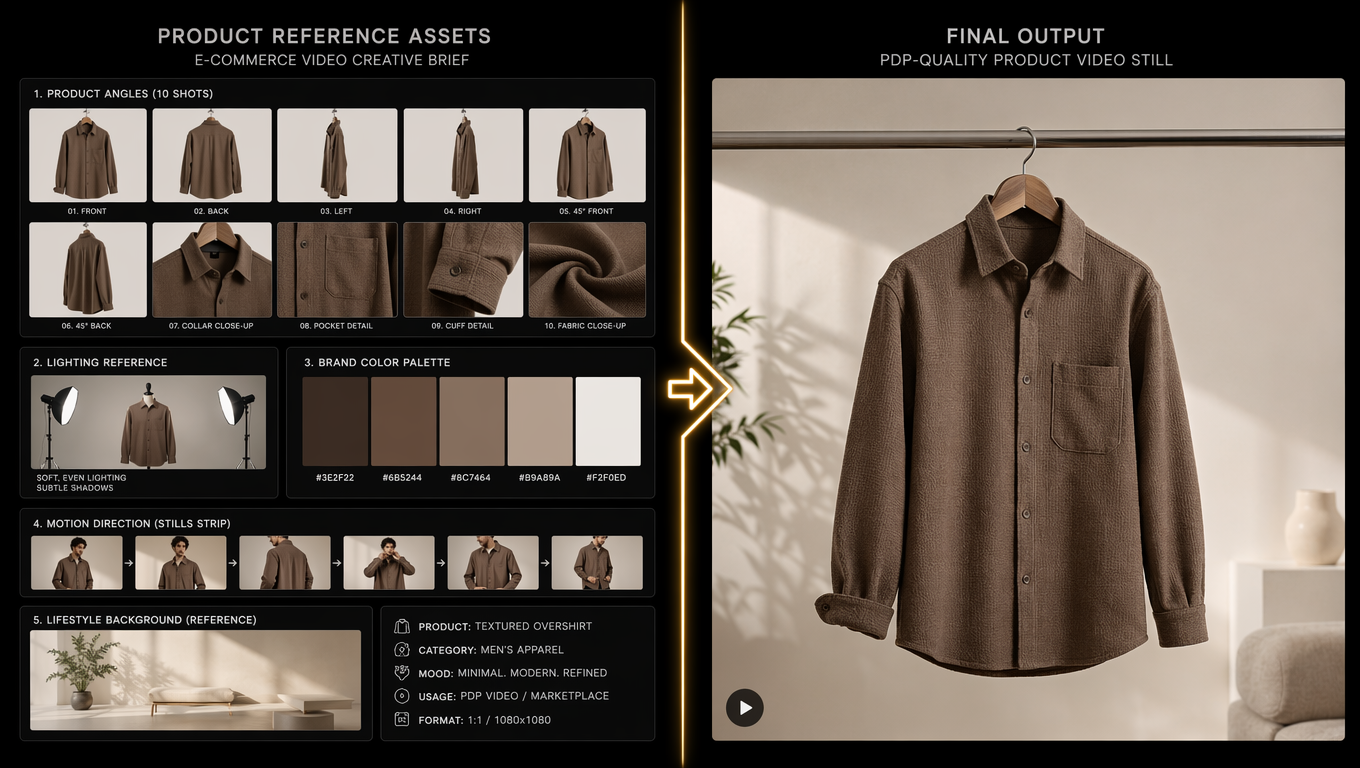
Up to 50 multimodal reference inputs — product photos, lighting references, brand palettes, audio tracks, motion style clips, and background settings can all feed a single generation
Co-generated synchronized audio — visual and audio signals are processed inside the same latent space, so the sound is in sync from frame one rather than added in post
There's also local re-draw editing: change one element of an existing clip — swap a product variant, shift the background, update a label — without regenerating the full video. That's the feature that will matter most for catalogue-scale ecommerce operations.
Three generation modes are supported: text-to-video, image-to-video, and motion-reference. ByteDance also added 3D white-model pre-visualization (useful for apparel and hard goods) and roughly 20% better prompt adherence compared to 2.0, per their June 2026 announcement.
Seedance 2.5 vs. Seedance 2.0: what changed
Feature | Seedance 2.5 | Seedance 2.0
Clip duration | Up to 30 seconds (native single shot) | Up to 15 seconds
Resolution | Native 4K, 10-bit color | 1080p–2K
Reference inputs | Up to 50 multimodal assets | Up to 12 reference files
Audio | Co-generated and synchronized | Not included natively
Editing | Local re-draw (no full regeneration) | Basic extension only
Languages | 11 languages | Primarily Chinese/English
Prompt adherence | ~20% improved (per ByteDance, June 2026) | Baseline
As of June 2026, Seedance 2.5 is in enterprise beta. ByteDance has targeted a public launch for early July 2026. No pricing has been disclosed — check seedance.tv for current plans as they release.
What the 50-reference limit means for ecommerce video
Most AI video tools give you a prompt and a handful of style inputs. Seedance 2.5 gives you a room full of constraints to work within — and that's exactly what a brand shoot requires.
Think through a single fashion SKU: ten product angles, a lighting reference, a music track, a brand palette swatch, a motion direction clip, a background setting. That's already 15+ inputs for one generation. With Seedance 2.0's 12-file cap, you were making compromises before you started. At 50 inputs, you're not.
The local re-draw tool is what makes catalogue-wide video production realistic. Build one master clip — the right set, the right motion, the right brand feel. Then re-draw each SKU variant individually without touching the camera move, the lighting, or the pacing. A womenswear brand with 200 active SKUs isn't regenerating 200 videos from zero. It's regenerating the product layer 200 times on top of a proven clip structure.
That's a different production problem than what most teams have been solving.
Where Pixro fits alongside a model like Seedance 2.5
Seedance 2.5 is a generation engine. What it doesn't handle is the ecommerce workflow layer — the part that turns a generated clip into a marketplace-ready, spec-compliant asset at scale.
Pixro's AI ecommerce video tools cover the production jobs that sit one layer below the generative model: product video, fashion reels, UGC-style video, hook video for ads, and AI influencer content — each built for apparel and consumer goods workflows, output at Amazon/Flipkart/Shopify specs, and priced on flat monthly plans rather than per-clip credits.
For teams already running AI product photoshoots at catalogue scale, Pixro handles the structured, spec-driven production layer. A model like Seedance handles high-fidelity scene generation where you need a specific cinematic output from a detailed brief. Both are useful. Neither replaces the other's job.
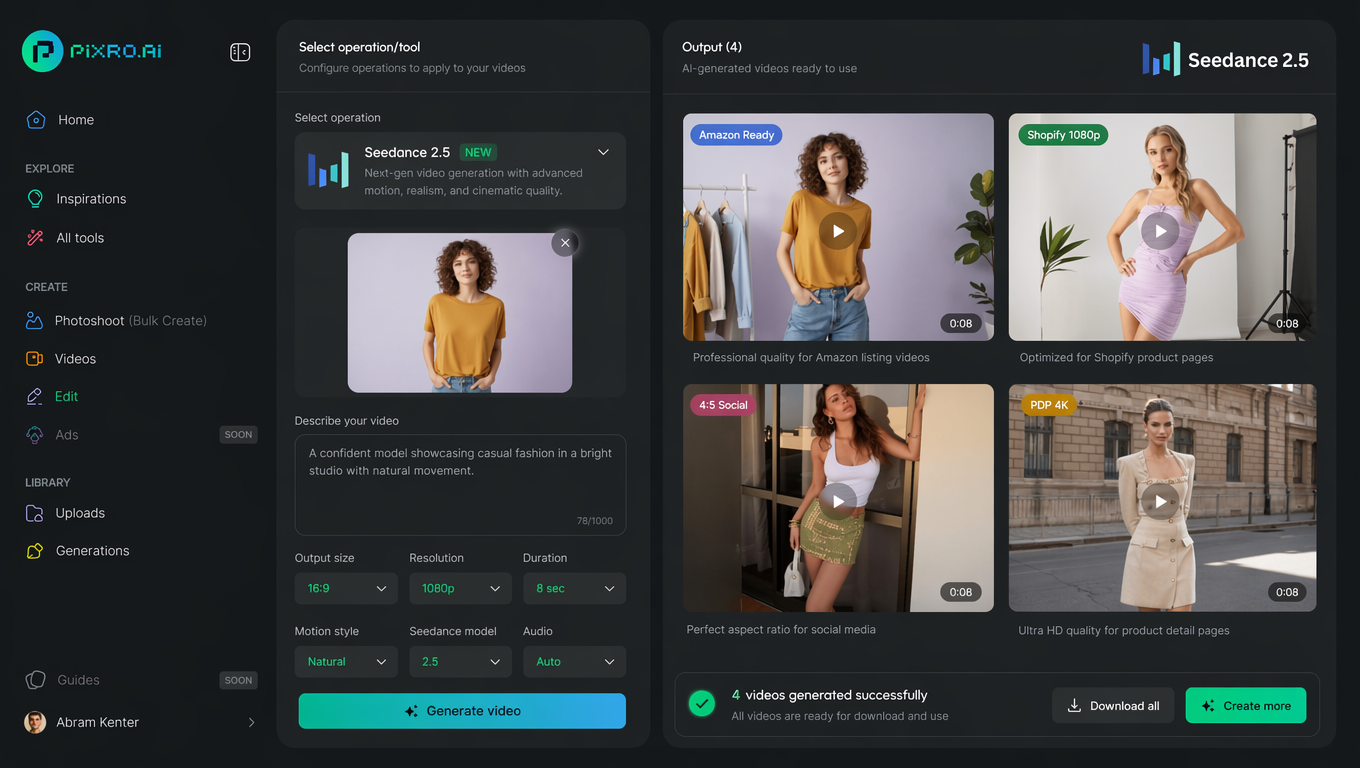
The practical question for most ecommerce operations: which tool owns which part of the workflow? For hero content, a launch video, or a seasonal campaign, a powerful generative model makes sense. For consistent social and PDP video at scale, the workflow layer matters as much as the model. Pixro's Trial plan starts at $10/mo — worth running one SKU through it this week if you haven't already.
Frequently asked questions about Seedance 2.5
When does Seedance 2.5 launch publicly?
ByteDance announced Seedance 2.5 on June 23, 2026, with a public launch targeted for early July 2026. As of June 2026, the model is in enterprise beta.
Can Seedance 2.5 generate product videos good enough for marketplace listings?
Based on ByteDance's announced specs, native 4K with 10-bit color meets the resolution bar for Amazon, Shopify, and most major marketplaces. Consistency across a 30-second clip — keeping a product's shape, texture, and color accurate from frame one to frame 900 — is where the 50-reference architecture is designed to help. Real-world output quality won't be confirmed until the public launch in July 2026.
How does Seedance 2.5 compare to Sora 2 and Veo 3?
Per ByteDance's June 2026 announcement, Seedance 2.5 leads current public specs on clip duration (30 seconds native), reference capacity (50 inputs), and native audio co-generation. Sora 2 and Veo 3 have wider third-party integrations and longer public track records as of this writing. The competitive picture will shift when pricing and full feature sets are public — check each provider's site, as these models update frequently.
Does Seedance 2.5 replace a video production crew?
For brand-level cinematic work, no — a director and DP bring judgment a reference-based model can't replicate yet. For performance creative, social content, and PDP video at catalogue scale, the gap is closing faster than most studios expected. The brands building this into their workflow now will have a speed and cost advantage in Q4 2026 and into 2027.
What's the best AI video tool for ecommerce brands today?
It depends on the job. For cinematic scene generation from a detailed brief, Seedance 2.5 looks strong when it launches. For catalogue-scale, marketplace-ready product video with consistent specs and flat pricing, Pixro is built for that workflow specifically. Most serious ecommerce video operations will end up using both: a generative model for hero content and a production tool for catalogue work at volume.