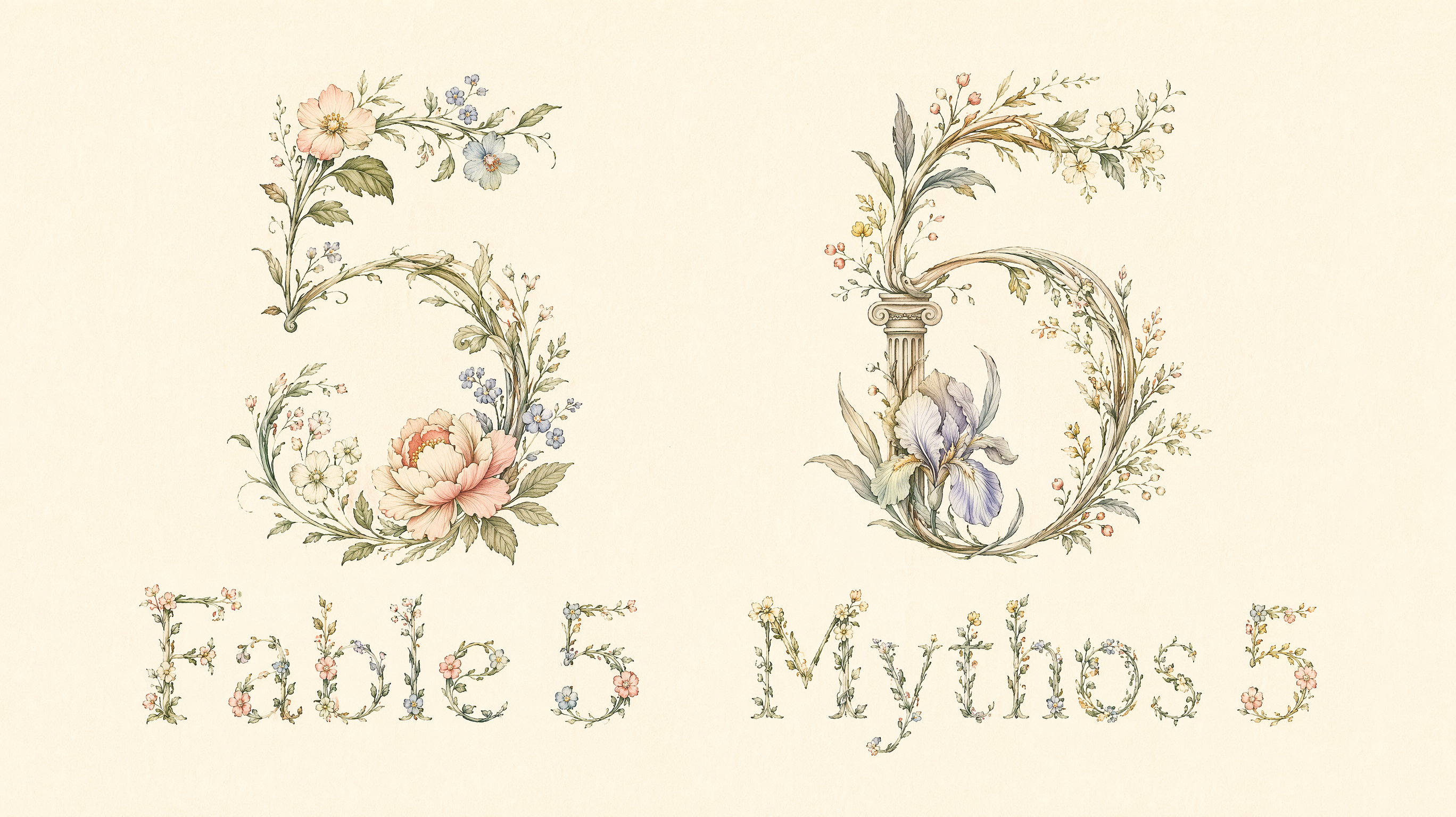
Fable 5 Is Back: What Its 3-Week Blackout Teaches
Claude Fable 5 Is Back: What Ecommerce Brands Should Learn About AI Model Reliability
Last updated: July 2026
Claude Fable 5 is back.
On June 9, 2026, Anthropic launched Claude Fable 5 alongside Claude Mythos 5. Three days later, on June 12, access was suspended after the U.S. government applied export controls to both models. On June 30, those controls were lifted. On July 1, Fable 5 became available globally again.
For most people, that is a headline about a chatbot.
For anyone running a store on top of AI tools, it is something more useful: a live lesson in AI model reliability.
When your catalogue workflow runs on AI, the question is not only, “Is the output good?” It is also, “Will this workflow still work when I need it next month?”
That is the real lesson from the Fable 5 blackout. A powerful model can launch, disappear, and return inside a single month. If your business depends directly on that model, its downtime becomes your downtime. If your business depends on a workflow layer that can adapt behind the scenes, the disruption matters much less.
That is also part of why Pixro is built as an ecommerce workflow tool, not just a wrapper around one model.
Quick takeaway
Claude Fable 5’s June 2026 suspension shows why ecommerce brands should avoid depending on AI tools that rely on only one model.
The safer choice is a workflow-based AI tool: one that lets you upload a product photo, generate catalogue images, create try-on shots, replace backgrounds, or make product videos without needing to know which model is running underneath.
In ecommerce, the job matters more than the model name.
What happened during the Claude Fable 5 blackout?

Three weeks: launched, suspended, redeployed.
Anthropic launched Claude Fable 5 and Claude Mythos 5 on June 9, 2026.
On June 12, the U.S. government applied export controls to both models. The order restricted access by foreign nationals. Because the order took effect immediately and there was no reliable way to verify user nationality in real time, Anthropic suspended access to both models for all users.
The trigger was a reported safeguard bypass. According to Anthropic’s own account, Amazon researchers had found a way to prompt Fable 5 into identifying software vulnerabilities in a way that raised safety concerns.
Anthropic later said its testing showed that less capable, widely available models could identify the same vulnerabilities, which suggested the risk was not unique to Fable 5. Even so, Anthropic trained an improved safety classifier to block the specific bypass technique.
On June 30, the export controls were lifted. Fable 5 was redeployed globally starting July 1, 2026, with updated safeguards. Anthropic also said blocked requests would be routed to a lower-risk fallback model instead of simply being answered by Fable 5.
The important point is not just that Fable 5 came back.
The important point is that a major AI model went dark for nearly three weeks, then returned with new safeguards and a clearer safety process.
That is AI maturity in public view.
Why AI model reliability matters for ecommerce brands
AI model reliability is the likelihood that the AI system powering your workflow stays available, consistent, safe, and usable over time.
For an ecommerce brand, unreliability is not theoretical. It can mean:
A catalogue refresh gets delayed.
A marketplace listing goes live with old images.
A festive campaign misses its launch window.
A new product drop cannot get visuals in time.
Your team has to rebuild a workflow overnight.
If you are using AI for product photography, try-on images, background replacement, ghost mannequin visuals, or short product videos, the model behind the tool matters. But depending on a single model too directly creates risk.
The Fable 5 blackout exposed three risks that sit underneath every AI tool.
1. Regulatory risk
A model can be restricted by government action overnight.
That may have nothing to do with your ecommerce use case. You may only be generating product photos or catalogue videos. But if the model powering your tool is affected by regulation, your workflow can still be interrupted.
This is exactly why ecommerce teams should care about infrastructure, not just output quality.
The best AI tool is not always the one that talks the most about one specific model. It is the one that keeps your workflow running even when the model landscape changes.
2. Safety-response risk
Frontier AI models are constantly being tested, patched, and hardened.
That is a good thing. But it also means access can change quickly when a new jailbreak, misuse pattern, or safety issue is discovered.
A safety patch can affect availability. It can also affect output behavior. The same prompt may produce different results after a model update because the safety layer, classifier, or generation behavior has changed.
For ecommerce brands, this matters because consistency is part of production quality.
You do not want your catalogue workflow changing randomly in the middle of a campaign.
3. Single-point-of-failure risk
If your whole workflow depends on one model, that model becomes a single point of failure.
This is the biggest practical lesson.
A thin AI wrapper usually exposes one model directly. If that model is unavailable, expensive, restricted, or changed, the wrapper struggles.
A workflow tool is different. It is designed around the job: product photography, try-on, ghost mannequin, product video, background replacement, ad creative, or catalogue generation. The model is only one component inside the system.
That difference matters.
If one model becomes unavailable, the workflow layer can route the job through another model, another pipeline, or another generation method. The user still gets the result they came for.
AI model reliability checklist for ecommerce brands
Before choosing an AI tool for your store, ask these questions:
Reliability question | Why it matters |
|---|---|
Does the tool depend on only one model? | Single-model tools are more exposed to outages, pricing changes, and policy shifts. |
Is it built around ecommerce workflows? | Workflow tools can hide model complexity and keep the user experience stable. |
Can the provider swap models behind the scenes? | This reduces downtime when a model is restricted, deprecated, or updated. |
Is pricing predictable? | Flat plans protect you from sudden per-image or per-token price changes. |
Do you own the outputs? | Downloaded images and videos should remain yours even if the model changes later. |
Does the tool have a stable production history? | A live, tested workflow is safer than an experimental model demo. |
The lesson is not “avoid AI.”
The lesson is: do not build your store operations on a model name. Build them on a reliable workflow.
How Pixro is built differently
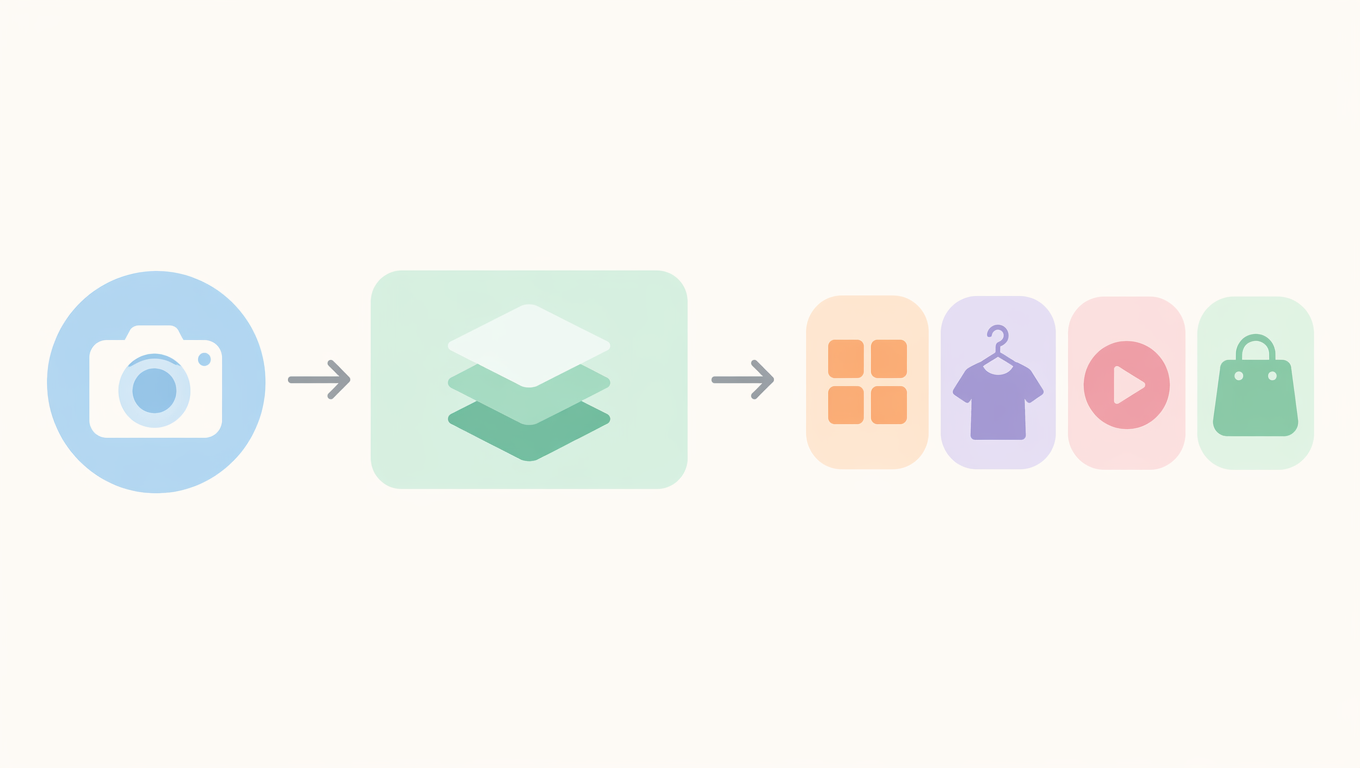
Product in, ecommerce-ready creative out — the model is just one component.
Pixro is designed for ecommerce output, not model dependency.
A store owner does not want to track which AI model is best this week. They want to upload a product photo and get usable creative: clean catalogue shots, lifestyle images, model try-on visuals, ghost mannequin images, background replacements, and short product videos.
That is the layer Pixro focuses on.
With Pixro, the ecommerce job stays the same even as the AI models underneath improve, change, or get replaced.
You upload a product image.
You choose the kind of output you need.
Pixro generates marketplace-ready visuals for your catalogue, ads, product pages, and social content.
The model race happens in the background.
That is the practical reliability advantage of a workflow-first AI tool. It reduces your exposure to any one model’s downtime, policy change, safety update, or pricing shift.
Why this matters during catalogue season
Imagine you are preparing a new product launch.
You need:
White-background marketplace images.
Lifestyle product photos.
On-model try-on visuals.
Social ad creatives.
Short product videos.
Clean visuals for WhatsApp, Instagram, and your website.
If your tool depends on one model and that model goes offline, your launch slows down.
If your tool is built as a workflow layer, the system can adapt. You do not need to rebuild the process, rewrite prompts, change tools, or train your team again.
This matters even more for small teams and D2C brands. Most ecommerce operators do not have a creative team waiting on standby. They need a dependable way to turn product images into selling assets quickly.
AI can do that.
But reliability comes from workflow design, not just model power.
The bigger picture: AI is maturing, not slowing down
It is easy to read the Fable 5 blackout as a sign that AI is fragile.
A better reading is that AI is maturing.
A model was scrutinised, restricted, patched, and redeployed with stronger safeguards inside a few weeks. That is not the end of AI. That is the industry learning how to handle high-stakes models in production.
For ecommerce, the takeaway is steadying.
AI-powered catalogue creation is not going away. AI product photography is not going away. AI try-on, ghost mannequin images, product videos, and automated ad creatives are not going away.
What will change is the model layer underneath.
Some models will launch. Some will be restricted. Some will get patched. Some will become cheaper. Some will be replaced.
The ecommerce workflow will remain.
That is where brands should place their trust.
Final takeaway
Claude Fable 5’s blackout is not just a tech news story. It is a reminder that AI tools need to be built for reliability, not hype.
For ecommerce brands, the smartest AI setup is not the one that depends on one famous model.
It is the one that keeps your catalogue workflow running.
That means choosing tools with workflow layers, predictable pricing, downloadable outputs, and the ability to adapt as models change.
Pixro is built with that philosophy: product image in, ecommerce-ready creative out.
The model can change.
The workflow should not.
Frequently asked questions
What is Claude Fable 5?
Claude Fable 5 is an AI model released by Anthropic on June 9, 2026. It was built for professional work across Claude Platform, Claude.ai, Claude Code, and Claude Cowork.
Access was suspended on June 12, 2026, after U.S. export controls were applied. Fable 5 returned globally starting July 1, 2026, after the controls were lifted and Anthropic added stronger safety safeguards.
What is the difference between Claude Fable 5 and Claude Mythos 5?
Claude Fable 5 and Claude Mythos 5 were released together by Anthropic.
The key difference is not simply that Mythos is “bigger.” Mythos 5 is a more restricted configuration intended for trusted, approved cybersecurity use cases, while Fable 5 is the generally available version with stronger safeguards for broader public and professional use.
For most users and businesses, Fable 5 is the relevant mainstream model.
Why was Fable 5 suspended?
Fable 5 was suspended after the U.S. government applied export controls to Claude Fable 5 and Claude Mythos 5 on June 12, 2026.
The action followed concerns around a reported safeguard bypass involving software vulnerability identification. Because Anthropic could not verify user nationality in real time, it suspended access to the models for all users.
When did Fable 5 come back?
The U.S. export controls were lifted on June 30, 2026. Claude Fable 5 became available globally again starting July 1, 2026.
Does an AI model going offline affect ecommerce tools?
It can.
If an ecommerce AI tool depends on only one model, that model’s downtime can interrupt the whole workflow. But if the tool is built as a workflow layer, it can route tasks through other models or pipelines behind the scenes.
That is why workflow-first tools are safer for ecommerce teams than thin wrappers around one model.
How do I choose a reliable AI tool for my store?
Look for four things:
A workflow layer, not just a raw model interface.
Predictable pricing, preferably with flat plans.
Outputs you can download and own.
A stable production workflow that can adapt when models change.
For ecommerce brands, the best AI tool is the one that helps you keep creating product visuals even when the model landscape changes.
Is it risky to build my ecommerce workflow on AI?
It is risky to depend too directly on one specific model.
It is much less risky to use a workflow-based AI tool that can adapt behind the scenes. AI-generated ecommerce visuals are becoming more common, not less. The important decision is choosing tools that are built for operational reliability, not just impressive demos.